
What does estiatorio mean in Greek?
The Greek word εστιατόριο (estiatório) means a restaurant. The Triantafyllidis Dictionary of Standard Modern Greek defines it as an establishment that prepares food and serves it to customers in a dining room. The term alone does not promise a price point, dress code or particular menu; those details come from the restaurant itself.
At Nisí Estiatorio in Astoria, the answer is visible in the menu’s range. Small plates sit alongside salads, seafood, grilled meat, garden dishes, sides, and dessert. That structure gives diners room to make the meal their own: order a few things for the middle of the table, choose a full entrée, or combine both. It is a practical way to understand the word—not as a strict restaurant category with rules, but as a Greek dining room whose actual character comes from its food.
What does the menu tell you to order first?
Start with mezze, the section for smaller plates. Htapodaki pairs grilled octopus with caramelized onions, roasted pepper, fava, and an olive-oil-and-lemon dressing. Dolmadakia brings stuffed vine leaves with aromatic rice and yogurt; spanakopita is crisp phyllo filled with spinach and feta mousse, served with yogurt and Parmesan mayo. For a table that wants to sample, pikilia gathers tzatziki, spicy feta, skordalia, and fava in one order. These are concrete choices, not a required sequence: choose what suits the group, then decide whether the meal needs a salad or a larger plate.
Nisí’s current menu lists these dishes and their descriptions, so check it before visiting; menus and availability can change. A Greek salad offers a cooler, sharper counterpoint: diced tomatoes, cucumber, peppers, red onion, Kalamata olives, capers, and feta. The Cretan-style ntakos salad adds rusk to tomatoes, onions, peppers, cucumber, olives, feta, and extra-virgin olive oil. Either can stand beside mezze or help round out an entrée.
Which seafood plates show the range?
The seafood section moves from simple grilling to sauced, composed plates. Grilled salmon comes with black-eyed beans. Swordfish souvlaki is skewered with peppers and onions, then served with ladolemono, lemon potatoes, and mixed-green salad. Shrimp orzotto takes a different route, pairing shrimp with the restaurant’s marinara sauce. For a dish with more components, the lobster pasta combines Maine lobster, linguine, marinara, and Parmesan. The menu also lists a Greek fish soup, psarosoupa agioritiki. These examples make “Greek restaurant” less abstract: the section includes fish, shellfish, citrus, vegetables, and substantial pasta dishes, rather than one single style of preparation.
If seafood is the reason for your visit, compare the choices in our Astoria Greek seafood guide as well as the live menu. The guide can help frame what to look for; Nisí’s own menu remains the authority for its current dishes. Nothing about the word estiatorio itself guarantees that a restaurant specializes in fish, so this is a useful distinction when choosing where to eat.
What if someone at the table prefers meat or vegetables?
The menu gives both a place. Paidakia arnisia is grilled lamb chops with lemon potatoes, while kotopoulo souvlaki puts chicken on a skewer with peppers, onions, and tomatoes, accompanied by hand-cut fries and salad. Mousaka layers potatoes, eggplant, zucchini, and ground beef beneath béchamel. For a meat-free main, gemista orfana consists of Greek tomatoes and peppers stuffed with herb-infused rice and baked in olive oil. A side of Greek fries or lemon potatoes can fill out a shared spread without turning dinner into a set formula.
Dessert is part of the same menu rather than an afterthought to define the place. Nisí lists baklavas, ekmek, galaktoboureko, kormos, and Greek yogurt. Their names give a few directions for ending the meal, but the online menu does not describe every dessert in detail; look at the current listing or ask the restaurant if you need ingredient specifics. This is also a sensible habit for dietary questions: check a dish’s full details with the restaurant rather than infer ingredients from its name.
How should you plan a meal at Nisí?
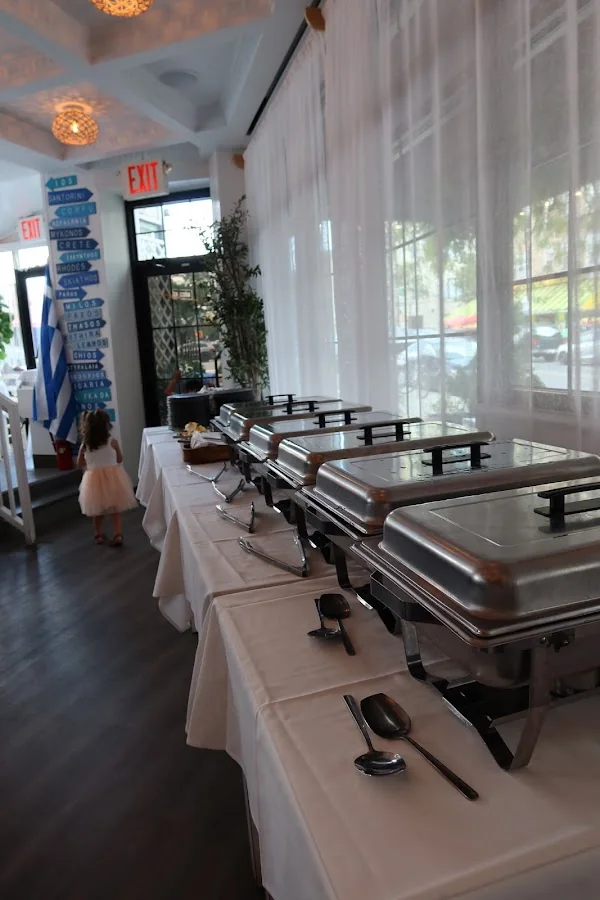
For a seated visit, use the reservations page to check the restaurant’s current booking option. For eating at home, Nisí directs customers to its takeout and delivery page, where online orders are completed through GetSauce. That route is useful if you want to review the menu before ordering; do not assume that every dine-in item is available for delivery. For a work lunch, family gathering, or other group meal, the catering page invites you to request the catering menu and share event details. Ask the restaurant about current options and terms when arranging a large order.
In the end, “estiatorio” is a translation, not a promise of a fixed ritual. The dictionary gives the basic meaning; the menu supplies the particulars. At Nisí, those particulars include mezze for sharing, salads with distinct textures, seafood prepared in several ways, grilled meat, a stuffed-vegetable main, and familiar Greek sweets. Read the live menu for what is being served now, then choose the shape of the meal that works for your table.
Frequently Asked Questions
What does estiatorio mean?
Εστιατόριο (estiatório) is the Greek word for a restaurant—an establishment that prepares food and serves it to customers in a dining room.
Is an estiatorio different from a taverna?
The word itself means restaurant; it does not promise a fixed price point, menu, or dining ritual. Check a restaurant’s own menu to see its format and dishes.
What kinds of dishes are on Nisí’s menu?
The current menu includes mezze, salads, seafood, grilled meat, garden dishes, sides, and desserts. Examples include grilled octopus, swordfish souvlaki, lamb chops, gemista orfana, and Greek sweets.
Can I order takeout, delivery, or catering from Nisí?
Nisí’s official site links to takeout and delivery ordering through GetSauce and offers a catering inquiry form where you can request the catering menu.